Before laboratories, there were groves. Before formulas, there were rishis who listened to plants. Kashvi carries that 3,500-year-old listening into your daily ritual.
In the hymns of the Atharvaveda, healers sang of herbs as living allies. Āyur — life. Veda — knowledge. The knowledge of life itself was born in forest hermitages, not workshops.
Charaka wrote of medicine; Sushruta, of surgery. In their samhitas appear formulations we still craft today — including the legendary kumkumadi tailam, the saffron elixir of radiance.
Knowledge walked from the texts into courtyards — the grandmother's ubtan before a wedding, the vaidya's neem twig, the winter abhyanga. Ayurveda survived because families practised it as ritual, not prescription.
Ayurveda crossed oceans. Arab traders carried Indian spices and formulations westward. In royal courts, kumkumadi and chandanadi were luxuries of queens — beauty rituals woven into statecraft and ceremony. The Siddha and Unani systems intertwined with Ayurvedic knowledge, enriching it further.
Colonial rule dismissed indigenous medicine as superstition. Textbooks were rewritten, practitioners sidelined. Yet in every village courtyard, grandmothers kept mixing ubtan, pressing amla oil, teaching daughters the rituals the empire could not see. Ayurveda survived not in institutions but in hands — passed quietly, stubbornly, from mother to daughter.
Independent India recognised Ayurveda formally — the AYUSH ministry, research institutes, GMP manufacturing. Ayurvedic products lined supermarket shelves. But something was lost in the scaling: the personal touch, the small-batch care, the forest connection. Mass production made Ayurveda available everywhere but forgot to keep it sacred.
Small batches. Cold-pressed oils. Herbs from the regions the old texts named. We didn't modernise Ayurveda — we simply gave the forest a way to reach your shelf.
Charaka taught that beauty (varna) reflects inner balance of the three doshas — Vata, Pitta, Kapha — air, fire and earth in the body.
वन विद्या · Forest WisdomThe world's finest kesar grows at 1,600 metres, in fields harvested the same way for over two thousand years.
कुङ्कुम · kunkumaChandan matures for decades before its heartwood turns fragrant — the texts call it the coolest of all woods, a balm for pitta skin.
चन्दन · chandanaCalled "the village pharmacy," a single neem tree once served as an entire town's skin clinic, water purifier and tooth-care aisle.
निम्ब · nimba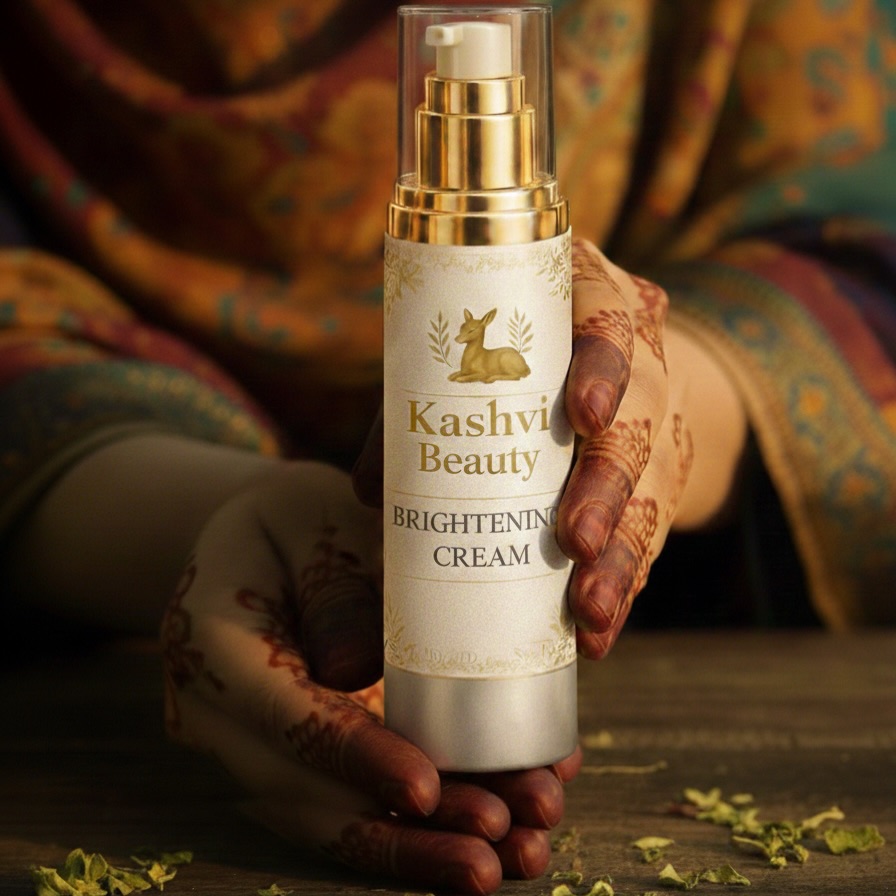

The texts prescribe rhythm, not routine — sun-facing mornings, moon-quiet nights. Follow the order the vaidyas taught.
